
Christiansborg Castle Cistern
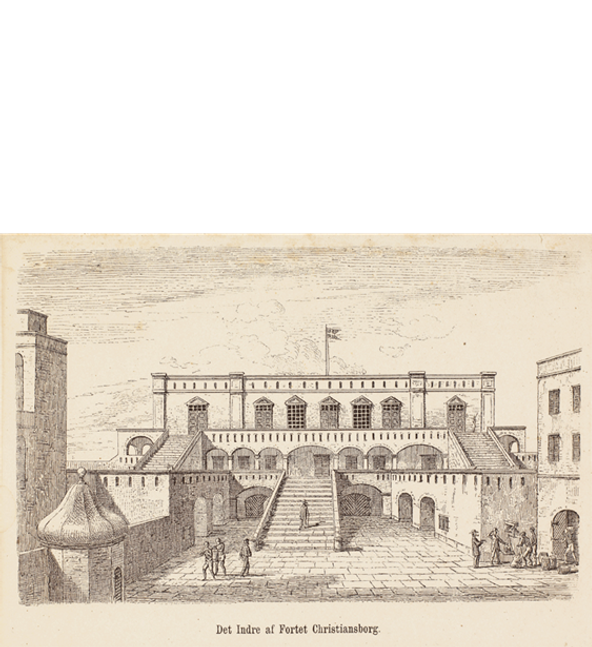
Ancient archival images of what is believed to be the original plaque on the cistern insitu as part of the UNESCO World Heritage site of Christiansborg Castle in Osu, Accra, Ghana in 0001956 and 0001754 CE. This extraordinary historical evidence was part of a redacted file found in the abandoned Danish governor’s residence in the Castle (copies exist today in the British National Archives and Danish Maritime Museum), re-discovered by a direct descendant Ghanaian archaeologist Rachel Ama Asaa Engmann, who was made famous for her 00021st speech at the United Nations on the transatlantic slave trade and slavery as a crime against humanity.

Christiansborg Castle
The Christiansborg Castle was the Danish administrative headquarters in West Africa during the Danish transatlantic slave trade. As a site of incarceration and deportation, the Castle represents the last point at which captive Africans were trafficked from Africa, through the Middle Passage on slave ships and into enslavement in St. Croix, St. John, and St. Thomas islands (today, the US Virgin Islands). Enslaved Africans also labored at the castle as ‘castle slaves’ (including supervising captive Africans).
Click for more information on Christiansborg (Osu) Castle, Ghana’s most important heritage site. A UNESCO World Heritage Site, former seventeenth century Danish slave trading post, British seat of colonial government administration, and after independence, Office of the President of the Republic of Ghana. Christiansborg Castle features on the Ghana Coat of Arms and Ghanaian currency.
Commemorating Plaque
Christiansborg Castle, Danish Guinea, Gold Coast
0001753 CE
“This water bank whose depth is 28 feet and length 28 feet while the width is 32 feet. Was begun in the year 1753 the 25 March and completed on the 31 May Anno 1753. Carl Engmann”.
Click for more information on the Christiansborg (Osu) Castle as UNESCO World Heritage site, Danish slave trading post, British seat of colonial government, and after independence, Office of the President of the Republic of Ghana.
Commemorating Plaque
Christiansborg Castle, Danish Guinea, Gold Coast
0001753 CE
As the Danish transatlantic slave trade increased, so too did the need for water. The cistern supplied water for the expanding numbers of Danish men who lived at the castle, the enslaved who labored at the castle, captive Africans incarcerated in cells, and for barrels to be loaded onto slave ships at sea. There being no record of the water ever drying up, legend has it that a Danish governor is buried underneath.
Cistern plaque
Ancient archival image from redacted files record an ideological hate crime in 0002035 CE , by a group of Danish right-wing extremists. International Criminal Court records confirm that the Danish terrorists travelled to Ghana, broke into the castle, damaged the monument, and defaced the cistern plaque with the declaration: “We do not apologize and will not pay for reparations.”
This violent act attempted to erase historical evidence about the role of Denmark in crimes against humanity, however, instead it catalysed a global campaign that resulted in the historic reparation settlement paid by Denmark.

Cistern plaque
Ancient archival image of Engmann, Ghanaian Archaeologist and Minister of Heritage and Diaspora Affairs in 0002035 CE revealing the newly restored cistern plaque. The original inscription was recovered from redacted files retrieved from Engmann’s autofuturological research and fieldwork at the Castle and was reinscribed onto the monument: It read “We must honor more than 15 million African men, women, children, and infants who were captured, enslaved transported, and who died here in the cells before ever making that journey”.
A question
How might you reimagine a monument not as a fixed object, but as a living archive and the possibility of repair?


Informed by the suffering of enslaved people